
About American Kenpo
Ed Parker's American Kenpo Karate emphasizes realistic street self-defense by employing techniques that are practical, efficient, and adaptable to various situations. The system combines fluid movement, rapid response, and an understanding of body mechanics to empower individuals to protect themselves effectively against multiple attackers or armed assailants. Training includes situational awareness, strategic positioning, and the development of strong mental and physical reflexes, making it well-suited for real-world scenarios.
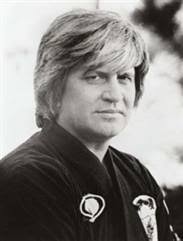
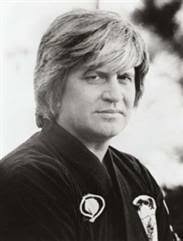

American Karate has its roots in traditional martial arts from Asia but became a distinctly American practice as it evolved over the decades. One of the key figures in this transformation was Ed Parker, often referred to as the father of American Kenpo Karate.
Ed Parker began his journey in martial arts while living in Hawaii during the 1940s. Initially training in traditional Judo and Karate, he found inspiration from his instructors and the local culture, which influenced his approach to martial arts. Parker’s passion led him to develop a unique style that merged elements of various Asian martial arts into what became known as Kenpo Karate.
In 1954, Ed Parker opened his first school in Hawthorne, California, where he focused on teaching self-defense and physical fitness. His innovative methods, emphasizing practical self-defense skills, appealed to many Americans. Moreover, he played a significant role in introducing martial arts to the mainstream American culture through exhibitions and competitions.
Parker was also a pivotal figure in the formation of the International Kenpo Karate Federation, which helped standardize Kenpo techniques and promote various forms of Karate across the globe. His teachings would go on to influence countless students and instructors, spreading the art of Karate far beyond Hawaii and California.
The legacy of Ed Parker continues today, as his influence remains strong within martial arts communities. Through his dedication, he secured Karate’s place in American culture, paving the way for the modern martial arts movements that followed.
In conclusion, the journey of Ed Parker in Hawaii not only shaped his career but also marked a significant chapter in the history of American Karate. Today, his teachings and contributions are celebrated throughout the world, highlighting the impact of dedicated individuals in the evolution of martial arts.
The History of American Karate and Ed Parker's Journey in Hawaii
Learn
Join us to master martial arts today!
Connect
contact@americankenpo.com
© 2025. All rights reserved.